A journey through time
The history of the city of Aachen dates back more than 2000 years. The city has a rich cultural and historical significance and is known as one of the oldest cities in Germany.

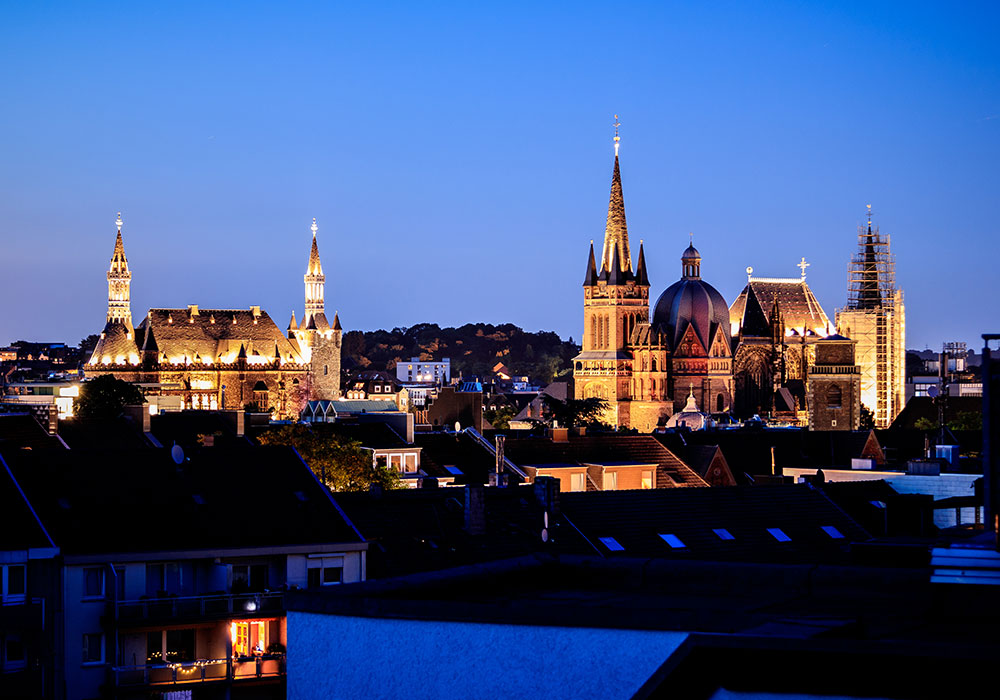
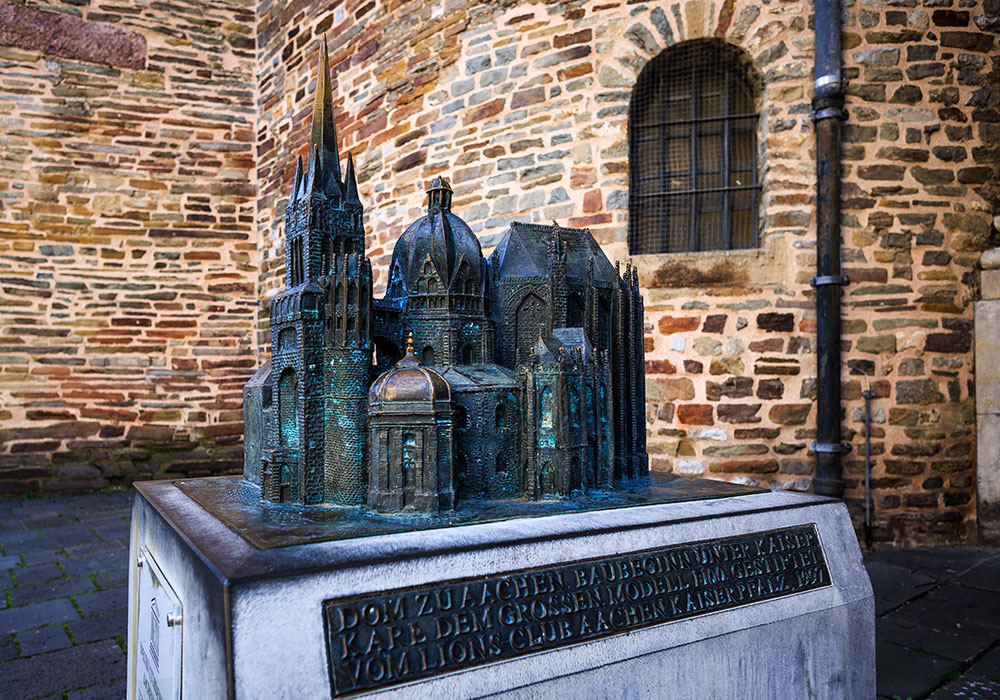
The Romans founded Aachen as a spa and called it “Aquae Granni” (“Water of Grannus”), named after the Celtic god Grannus. The city experienced its heyday in the 8th and 9th centuries under Charlemagne, who had his residence here and made the city an important center of the empire. The city flourished as a place of science and art and was known for its architectural masterpieces, such as the construction of Aachen Cathedral, which was declared a UNESCO World Heritage Site in 1978.
A trading center of the textile industry
Over the centuries, Aachen was an important trading center and an important place for the textile industry. The city was also an important place for glass production and the manufacture of needles and cloth.
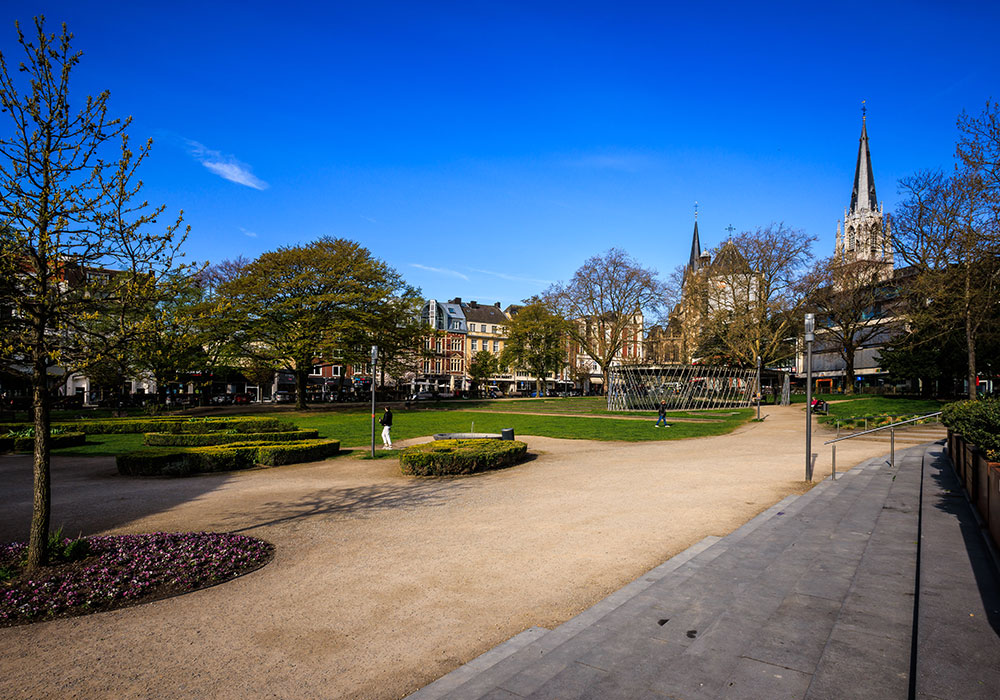
During World War II, the city was heavily bombed and many historic buildings were destroyed. After the war, the city was rebuilt and flourished again. Today, Aachen is an important city for science and technology and is home to one of the most renowned technical universities in Europe, the RWTH Aachen.
Cultural center of Europe
The city also has a rich cultural scene, with numerous festivals and events throughout the year, including the CHIO Aachen, the largest equestrian event in the world, and the Aachen Christmas Village, which attracts thousands of visitors each year.

The history of the city of Aachen is rich and varied and has contributed to the city becoming an important cultural center of Europe.